Article: Home Theater Room Design
Home Theater Room Design
A great home theater room isn't built around the TV. It's built around the experience — and the TV is just one piece of it. The rooms that actually feel like a cinema, the ones where guests stop mid-sentence when they walk in, are the ones where every element was chosen to work together: the screen, the sound, the seating, and the pieces that tie the room together visually.
At The Sofa Store, we help customers design the seating side of that equation every day. Here's how to think through a home theater room from the ground up.
Start With How the Room Gets Used
The first question isn't "what TV should I get" — it's "how does this room actually function?" A dedicated basement theater with blackout curtains and a fixed seating row is a completely different design problem from a family room that needs to work for homework, guests, weekend movies, and game day.
Your answer to that question determines everything else: whether you want motion seating or a custom sofa, how formal or casual the room should feel, and how flexible the layout needs to be.
Motion Seating vs. Custom Upholstery — or Both
Most home theater rooms benefit from a combination of seating types rather than a single solution.
Parker House motion seating is built for extended viewing. Power recliners, zero gravity recliners, and power reclining sectionals let every person in the room find their ideal position independently. The zero gravity models — which place your legs above heart level and distribute weight evenly — are particularly well suited to long sessions. We carry the full Parker House lineup at The Sofa Store, including the Dalton, Spartacus, Momentum, Nexus, Penfield, Linus, and Haywood collections across a range of colors and configurations.
Bassett and Palliser custom upholstery brings the rest of the room together. A custom sofa in a fabric or leather chosen to complement your motion seating anchors the space and gives it a finished, designed look rather than a showroom floor feel. Bassett and Palliser both build to order — your choice of frame, fill, fabric, and configuration — which means the piece fits your room rather than the other way around.
A common combination: a Parker House zero gravity loveseat or recliner as the primary viewing seat, with a custom Bassett sofa behind or beside it for overflow seating and a more traditional living room feel when the TV is off.
Getting the Layout Right
A few principles that apply to almost every home theater room:
Viewing distance first. The distance from your seating to the screen determines the ideal TV size — not the other way around. As a rule, your viewing distance in inches divided by 1.5 gives you the ideal screen size. A 10-foot room calls for a 75-85 inch TV. Place your seating before you size the screen.
Eye level matters. Seated eye level should hit the center of the screen or slightly below. Most people mount their TVs too high, especially when they make that decision standing up rather than sitting down. Measure from your seated position.
Leave clearance for recliners. Power recliners and zero gravity models often use a wall-hugger mechanism that slides forward as they recline, requiring as little as 2-3 inches from the wall. Still, account for the full open position when planning your layout — you don't want the footrest hitting a coffee table or the back of the sofa.
The sofa behind the recliners. If the room is deep enough, a row of recliners in front with a sofa or loveseat behind on a riser creates a genuine tiered theater feel. The riser doesn't need to be dramatic — even 8-10 inches of elevation puts rear-row viewers over the heads of front-row viewers.
The TV and Sound
Once the seating and layout are set, the TV and audio decisions become much easier because you know exactly what you're working with.
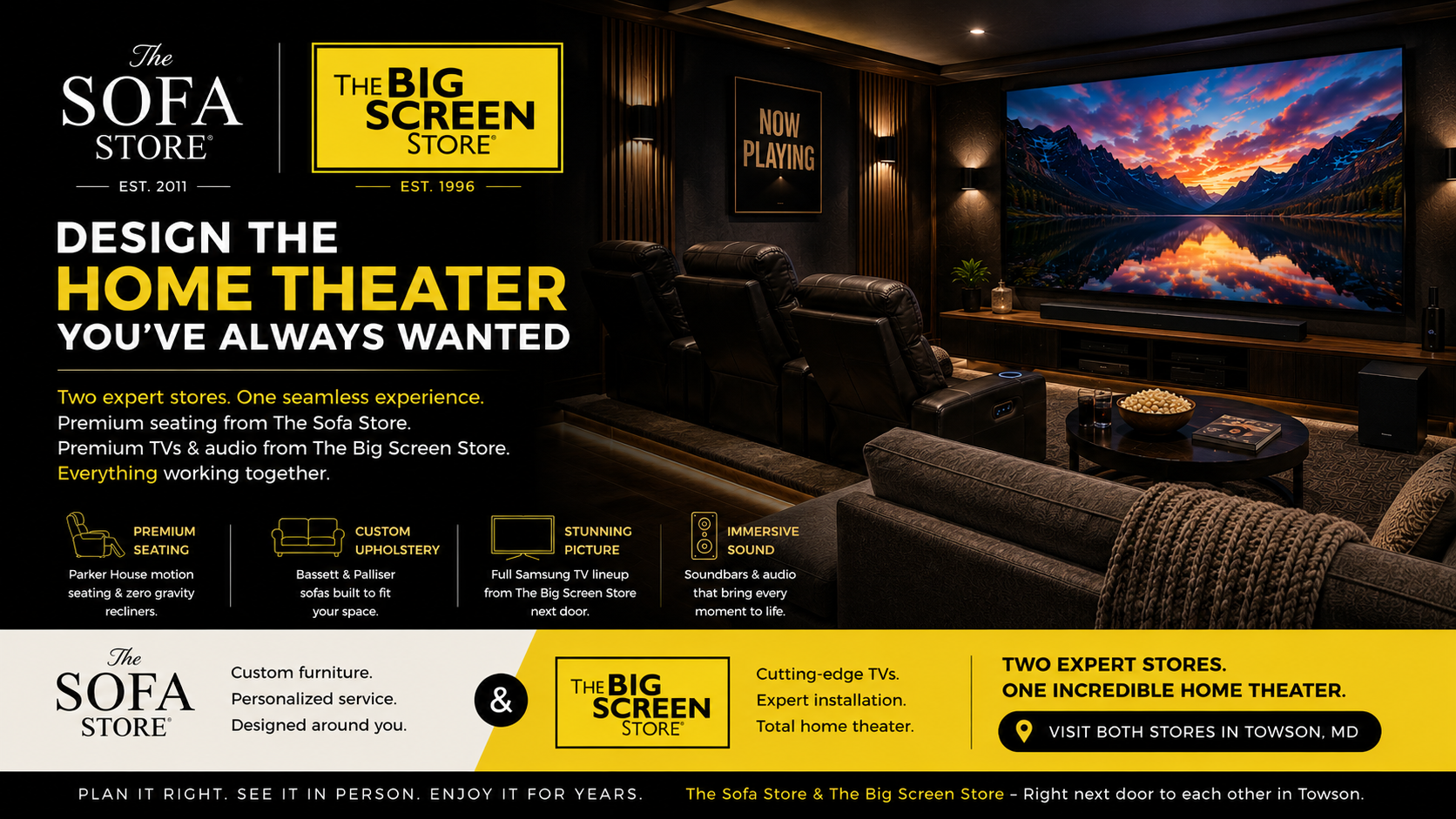
Our neighbors at The Big Screen Store — located right next door to us here in Towson — carry the full Samsung TV lineup and a complete range of soundbars. Their team specializes in matching screen size and technology to room conditions, and their installers handle mounting and wire concealment. For anyone designing a complete home theater room, it makes sense to do both stops in the same visit.
They've also published two guides worth reading before you make any seating or TV decisions:
- How to Choose Home Theater Seating — covers every Palliser model, room planning, wall clearance, and what features are worth paying for.
- Power Recliners vs. Zero Gravity vs. Power Sectionals — breaks down every Parker House motion seating category and helps you figure out which fits your room.
Come See It in Person
The best home theater rooms are designed in person, not online. Fabric choices, seating comfort, and how pieces look together in a real space are things you can only evaluate by seeing and sitting in them.
Our Towson showroom carries Parker House motion seating, Bassett custom upholstery, and Palliser custom seating all under one roof. Bring your room dimensions and we'll help you put together a layout that works.